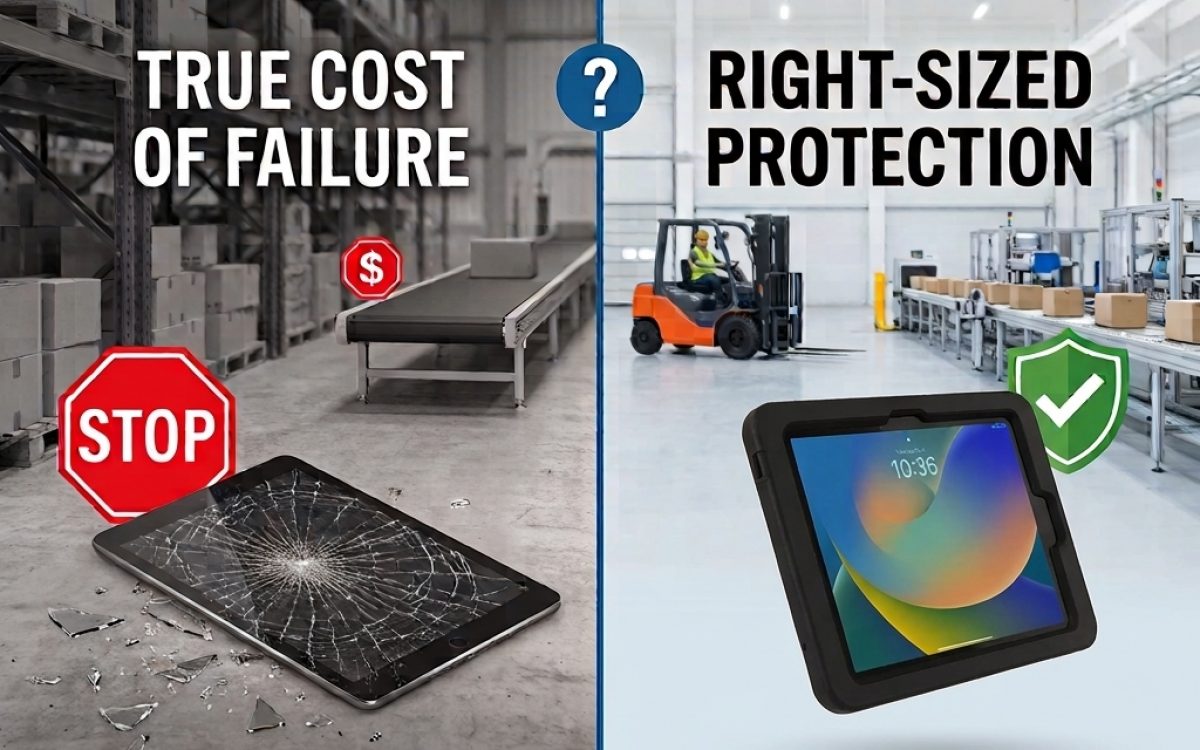
When modernizing warehouse operations, deploying field service solutions, or digitizing manufacturing environments, IT and operations leaders face a critical hardware decision. The core choice comes down to two strategic paths: purchasing expensive, heavy purpose-built portable Industrial PCs (IPCs) or deploying familiar commercial tablets-such as the Apple iPad or Microsoft Surface Pro-paired with enterprise-grade protective cases and ergonomic mounting systems.
Most mobility initiatives begin by selecting enterprise software, defining digital workflows, and procuring frontline hardware. However, the tablet hardware alone is only half the equation. Protective enclosures, shatterproof screen covers, magnetic vehicle mounts, shoulder/hand straps, and stylus retention accessories directly dictate device durability, worker adoption, and long-term deployment success.
1. The Subpar Protection Trap & Foreign Object Debris (FOD) Hazards
A widespread misconception in enterprise mobility is that field failures stem only from completely unprotected devices. In reality, most enterprise deployments supply tablets in lightweight commercial cases or rely on aftermarket tempered glass screen protectors. While tempered glass covers protect displays from surface scratches, they create an extreme operational vulnerability in industrial and manufacturing environments.
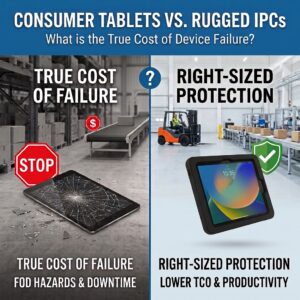
When a tablet dropped from a forklift or hit by a handheld tool impacts concrete, tempered glass screen protectors do not deform-they shatter into razor-sharp micro-shards and fine glass dust. In manufacturing and processing facilities, this creates severe operational hazards:
Foreign Object Debris (FOD) Contamination: In food processing, pharmaceutical packaging, and high-precision electronic assembly, shattered glass particles falling into raw material hoppers or conveyor lines pollute entire production batches. Under FDA 21 CFR 110.20 and strict OSHA workplace safety mandates, glass breakage above exposed processing lines forces an immediate facility shutdown.
Catastrophic Unplanned Downtime: Cleaning a glass-contaminated line requires halting production, executing exhaustive multi-stage purges, and scrapping thousands of dollars in contaminated inventory-costing tens of thousands of dollars per incident.
Worker Laceration Risks: Technicians attempting to swipe work orders across a fractured glass protector face severe cut injuries, driving OSHA recordable incidents and worker compensation claims.
2. IT Support Strain and Administrative Fleet Overhead
Inadequate fleet protection places an ongoing administrative and financial burden on IT departments. Every device failure triggers a costly multi-department reaction:
Ticket Creation & Diagnostics: IT support staff spend valuable hours logging tickets, diagnosing hardware damage, and coordinating RMA warranty claims.
Buffer Fleet Capital Tied Up: Operations teams must maintain costly unassigned ‘hot swap’ tablet pools (often 10-15% of total fleet size) to cover repair turnaround delays.
Provisioning & MDM Re-enrollment: Reprovisioning replacement hardware, re-applying security policies, and re-enrolling tablets into Mobile Device Management (MDM) platforms drains IT resources away from core digital transformation projects.
3. Bridging the Gap: Zone-Tailored Protection for Enterprise Mobility
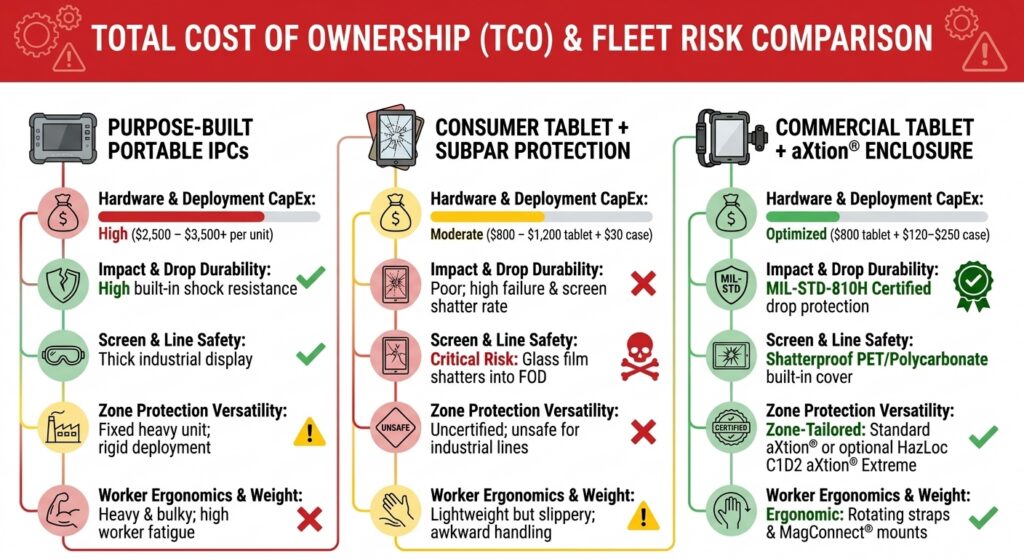
Organizations do not need to abandon intuitive iOS or Windows software ecosystems, nor do they need to spend upwards of $3,000 per device on heavy, specialized portable Industrial PCs (IPCs). The most effective enterprise strategy is bridging the gap by equipping commercial tablets with purpose-built aXtion® protective ecosystems tailored precisely to each operational zone.
Crucially, IT leaders must understand that protective requirements vary across a facility. Rather than forcing a single high-cost case model across every department, The Joy Factory offers a versatile, zone-appropriate protective spectrum:
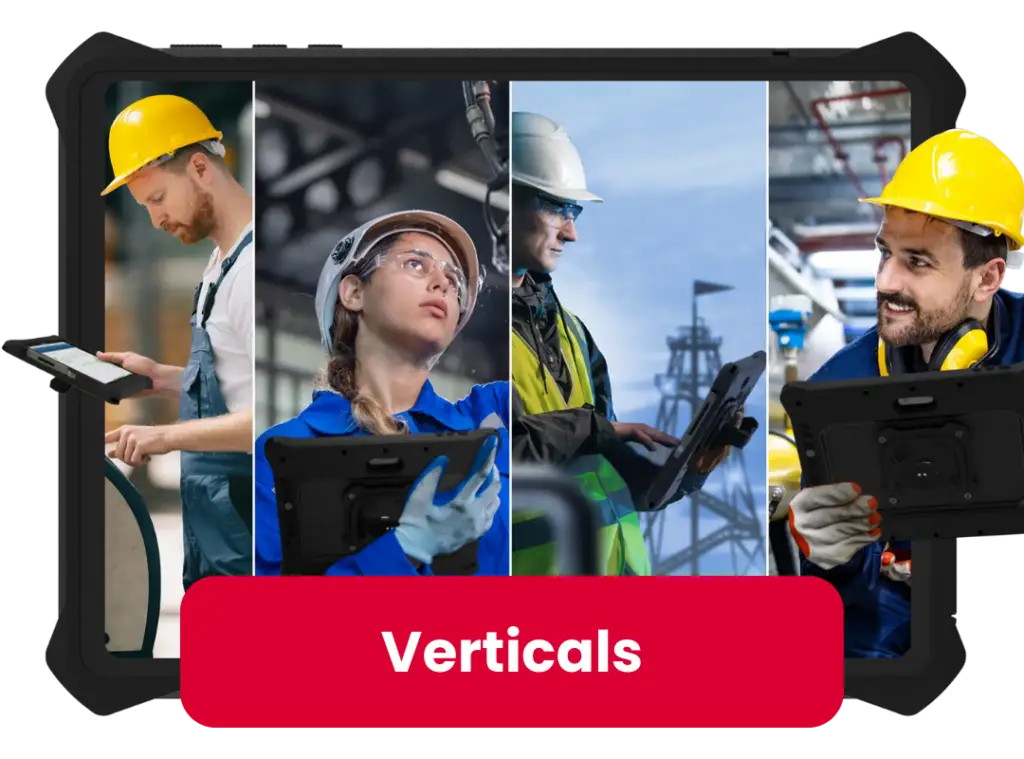
Standard Industrial Zones (Assembly, Warehousing, Field Services): For the vast majority of enterprise operational environments, standard aXtion® protective enclosures (such as the aXtion® Pro or aXtion® Bold) provide MIL-STD-810H shock/drop protection, IP68 waterproofing, and built-in heavy-duty plastic screen covers that will never shatter or generate glass debris. This provides complete rugged durability without unnecessary weight or cost.
Volatile Hazardous Zones (Oil Refineries, Chemical & Paint Plants): When specific facility zones require certified intrinsic safety compliance, enterprises can selectively step up to certified Class I, II, & III, Division 2 Hazardous Location (HazLoc) enclosures like the aXtion® Extreme. This selective deployment prevents over-specifying hardware for non-hazardous zones while ensuring full regulatory compliance where required.
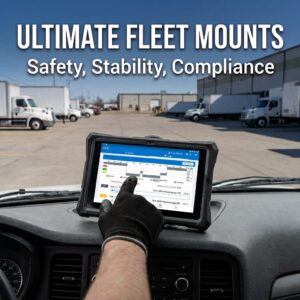
Seamless Ergonomics & Vehicle Docking: Across all aXtion® case tiers, integrated MagConnect® magnetic mounting systems allow fast, secure docking on forklifts, mobile carts, and machinery walls, while 360-degree rotating hand straps reduce hand fatigue during long worker shifts.
BUILD YOUR ENTERPRISE TABLET DEPLOYMENT
Avoid hidden downtime expenses and eliminate glass contamination hazards on your production lines. Explore aXtion® Rugged Tablet Cases and MagConnect® Mounting Systems at www.thejoyfactory.com, configure your tablet fleet with our interactive Custom Bundle Builder, or contact The Joy Factory Enterprise Sales Team to request evaluation units.
Frequently Asked Questions
What is the primary difference between a commercial tablet in an aXtion® case and a portable Industrial PC (IPC)?
Purpose-built portable Industrial PCs are specialized, heavy industrial computers that often cost $2,500-$3,500+ and add significant weight. Deploying commercial tablets (like an iPad or Surface Pro) in aXtion® cases delivers equivalent MIL-STD-810H shock protection and IP68 waterproofing at approximately half the hardware cost, while retaining familiar software, lighter weight, and superior frontline adoption.
Do I need a Hazardous Location (HazLoc) certified case like the aXtion® Extreme for my entire tablet fleet?
No. Class I, II, Div 2 HazLoc certified cases (like the aXtion® Extreme) are specialized enclosures required specifically for volatile environments containing explosive gases or combustible dust (e.g., oil processing or chemical facilities). For standard manufacturing lines, warehouses, and field operations, standard aXtion® cases provide military-grade drop protection and IP68 waterproofing at a lower weight and cost. Matching case protection to specific facility zones prevents over-specifying hardware fleet-wide.
Why are aftermarket glass screen protectors hazardous in manufacturing facilities?
Tempered glass screen protectors absorb impact by fracturing into sharp shards and fine glass dust. In manufacturing or packaging lines, shattered glass falling into product hoppers or conveyor belts creates Foreign Object Debris (FOD) contamination. Under FDA 21 CFR 110.20 and OSHA rules, glass breakage over processing areas triggers mandatory line halts, extensive purges, and scrapped product batches. aXtion® cases eliminate this risk with heavy-duty, shatterproof plastic screen covers.