Why Standard Tech Fails in Sterile Environments
From patient bedsides to pharmaceutical cleanrooms, digital transformation has replaced paper charts and clipboards with iPads and Microsoft Surface Pros. These devices grant doctors, nurses, and lab technicians instant access to electronic health records (EHR) and critical compounding data.
However, deploying mobile technology into a sterile environment introduces a major conflict: electronics and harsh cleaning chemicals do not mix. Relying on bare tablets or standard commercial cases will lead to rapid hardware failure and dangerous compliance violations. In fact, according to the Centers for Disease Control and Prevention (CDC), on any given day, about 1 in 31 hospital patients has at least one healthcare-associated infection (HAI). Controlling vector surfaces and properly sanitizing digital equipment is non-negotiable.
The Chemical Toll of Infection Control
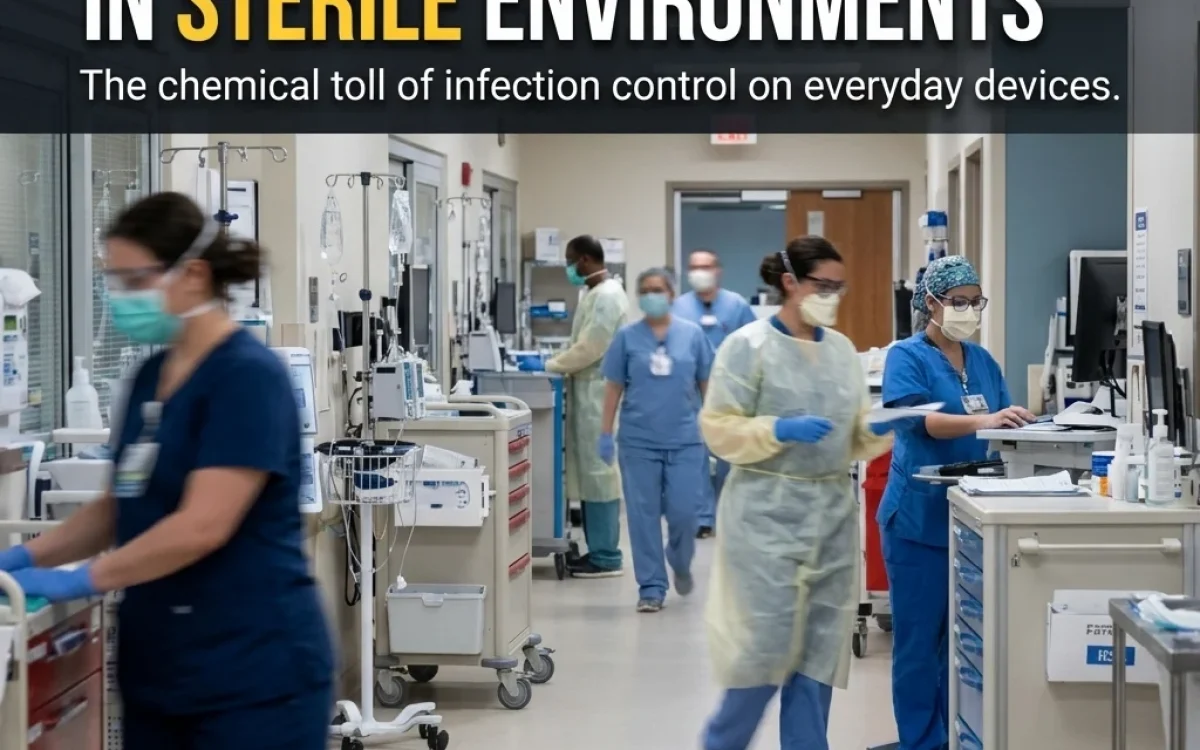
Whether you are following hospital infection control protocols or strict USP General Chapter <797> cleanroom guidelines, tablets must be sanitized constantly. Between every patient room or before entering a sterile compounding buffer area, devices are rigorously wiped down.
The chemicals required to kill dangerous pathogens and spore-forming bacteria such as: 70% isopropyl alcohol, quaternary ammonium compounds (QUATs), sodium hypochlorite (bleach), and accelerated hydrogen peroxide, are incredibly harsh. Many of these are standardized on the EPA’s registered disinfectant products lists. When applied to standard consumer electronics, these hospital-grade disinfectants create two massive problems:
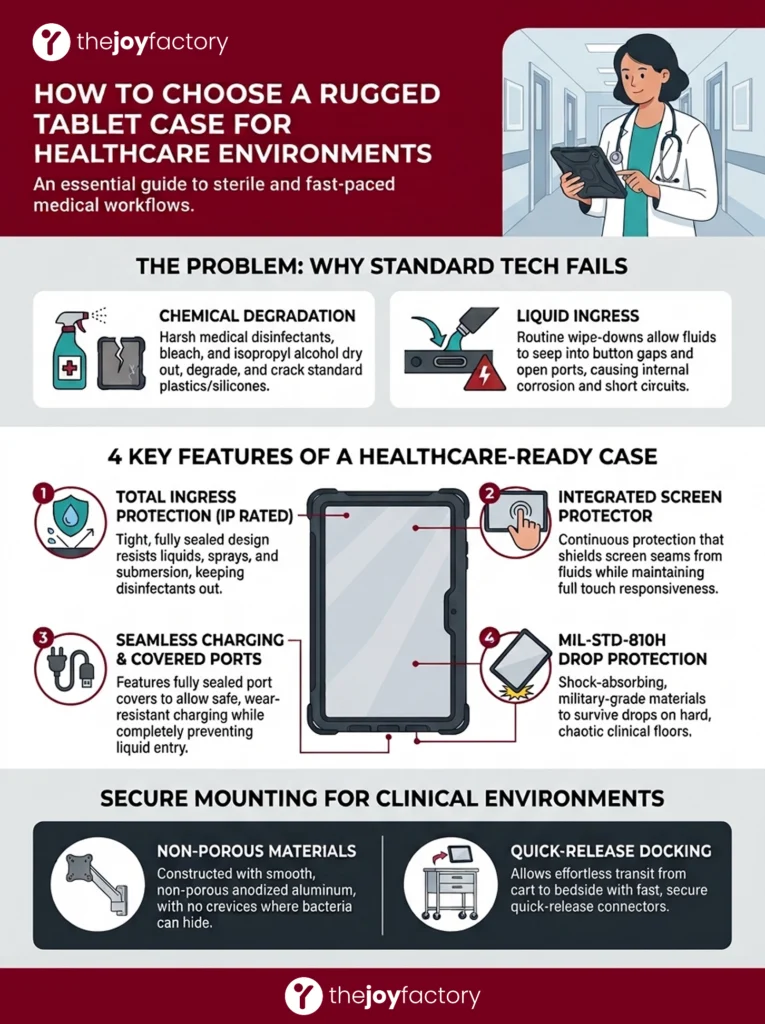
- Chemical Degradation: Standard polycarbonates, rubbers, and silicones used in consumer iPads and generic protective cases are not formulated for chemical resistance. Within weeks of daily bleach or peroxide wipedowns, these plastics will begin to yellow, dry out, become brittle, and eventually crack open.
- Liquid Pooling: When a nurse wipes down a bare tablet, the liquid disinfectant inevitably seeps into the exposed charging ports, speaker grills, and button gaps. This moisture quickly corrodes the internal copper and gold pins, permanently shorting out the motherboard.
What Makes a Tablet Case Healthcare-Ready?
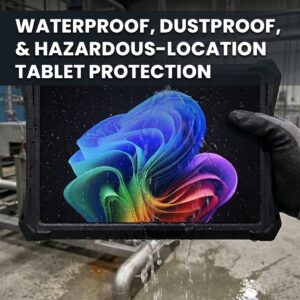
To survive clinical and cleanroom environments, an iPad or Surface Pro must be enclosed in a specialized rugged case. These cases utilize fully sealed ports to prevent liquid ingress.
4 Key Features of a Rugged Tablet Case
To prevent cross-contamination without destroying your hardware budget, your fleet must be equipped with specialized rugged tablet cases. When evaluating solutions for healthcare and cleanrooms, ensure the case meets these strict criteria:
- Total Ingress Protection (IP68 Rating): To prevent liquid disinfectants from reaching the tablet’s core, the case must feature tight, sealed port covers and seamless button membranes. Look specifically for an IP68 (fully waterproof and submersible) rating. This allows staff to heavily saturate the exterior without fear of internal liquid damage.
- Integrated Screen Protection: A case that only wraps around the back leaves the native glass exposed, allowing liquid to pool in the seams between the case and the screen. A true rugged case requires a built-in, wipeable screen protector to eliminate these fluid traps.
- Seamless Charging and Compatibility: If ports are fully sealed, charging can become a logistical nightmare. Look for cases that feature magnetic charging capabilities, or heavy-duty silicone port covers that can be easily opened and securely closed on carts.
- MIL-STD-810H Drop Protection: Emergency rooms are chaotic, and drops to the floor are unforgiving. Ensure the solution is certified to MIL-STD-810H drop-test standards and features shock-absorbing corners. Integrating a hand strap also reduces operator fatigue and prevents accidental drops.
Secure Mounting for Clinical Environments
In many clinical settings, tablets need to function as both mobile devices and fixed workstations.
When mounting iPads or Surface Pros to IV poles, crash carts, or cleanroom walls, utilize mounts made of smooth, non-porous materials (like anodized aluminum) that lack deep crevices where bacteria can hide.
Pair these mounts with quick-release or magnetic connections. This allows a clinician to effortlessly detach the sealed tablet, take it into the isolation room, and then dock it back onto the cart for immediate disinfection and charging.
By investing in purpose-built rugged cases and mounts, you ensure that your technology adheres strictly to infection control protocols, maximizing the lifespan of your IT fleet while maintaining the highest standards of patient safety.