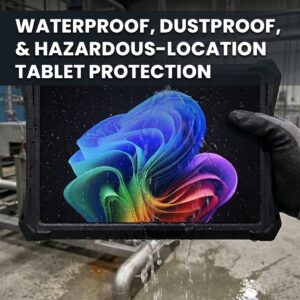
Waterproof, Dustproof, and Hazardous-Location Tablet Protection
Selecting the Right Case for Plant Workflows
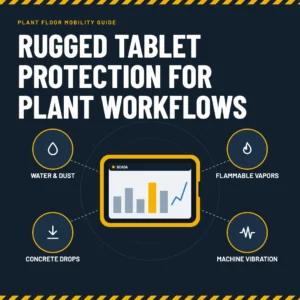
Plant floor digital transformation requires real-time data input, seamless SCADA monitoring, and continuous material tracking at the point of action. Deploying commercial tablets like Apple iPads or Microsoft Surface devices directly into plant workflows exposes sensitive electronics to intense environmental stressors. Water jets, corrosive ambient airborne dust, drop impacts onto concrete, continuous machine vibration, and atmospheric chemical vapors can destroy unprotected devices within days.
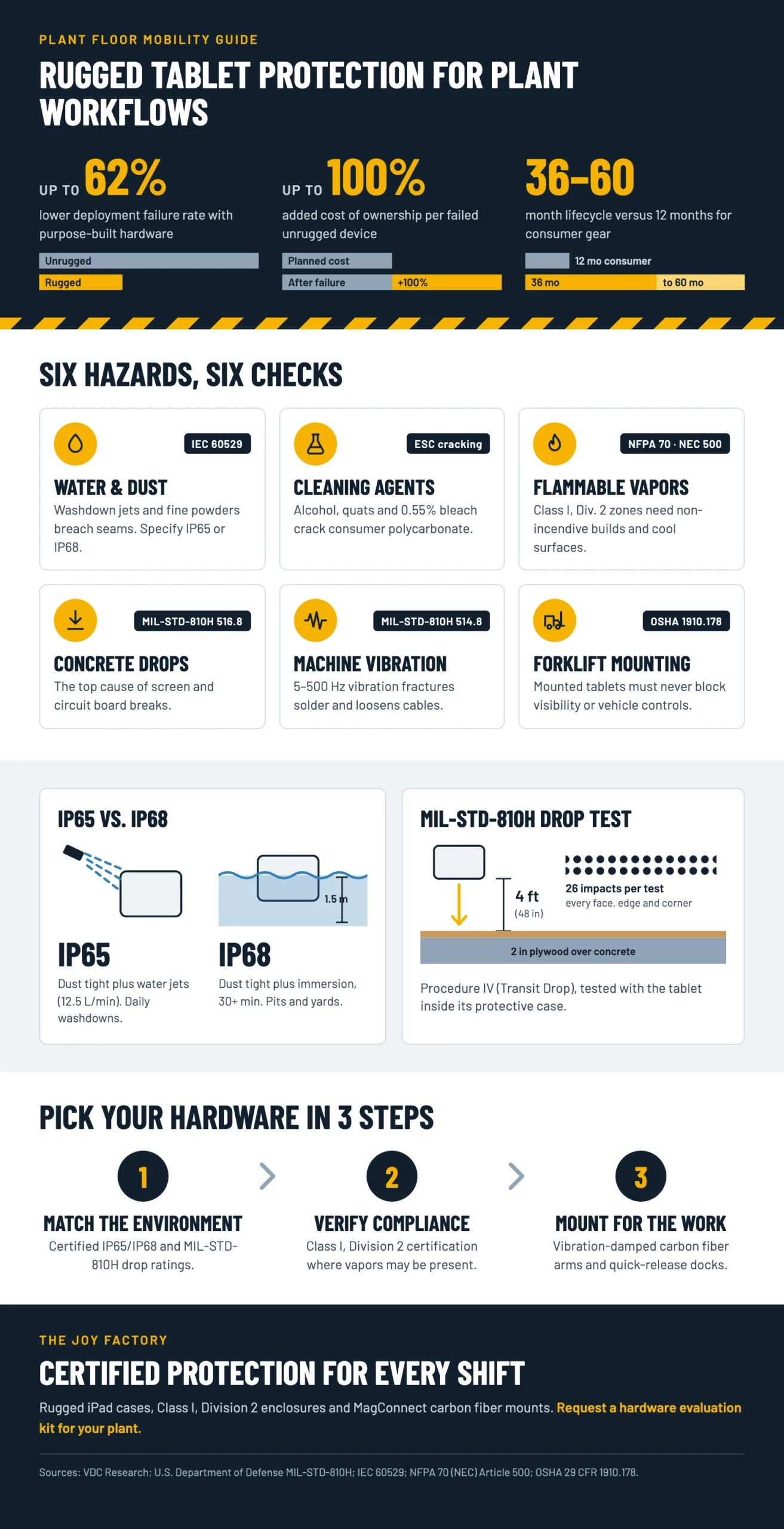
Selecting purpose-built industrial tablet enclosures and rugged tablet mounts is not simply an exercise in accessory purchasing. It is a fundamental engineering decision that impacts operational uptime, worker safety, and digital network reliability. Enterprise mobility research indicates that unruggedized mobile device deployments incur significant failure rates, inflating total cost of ownership by up to 100% per failed unit due to lost worker productivity and emergency replacement cycles Source: VDC Research. Deploying purpose-built hardware reduces these frontline deployment failure rates by up to 62%.
This technical guide analyzes the specific physical hazards of manufacturing and warehousing environments, dissects key regulatory standards, and provides actionable criteria for selecting industrial iPad cases, enclosures, and mounting arms for hazardous and demanding plant workflows.
Environmental Hazards and Chemical Stressors in Processing Plants
Industrial operations present physical threats that easily penetrate standard commercial cases. Understanding the precise mechanical and chemical dynamics of your facility is the first step toward selecting the correct protective hardware.
Ingress Protection
Deciphering IP65 and IP68 Standards
Particulate ingress and liquid exposure represent the primary mechanical failure mechanisms for plant-deployed tablets. Airborne conductive dusts, fine organic powders, and heavy moisture can breach housing seams, clogging charging ports and causing internal short circuits.
When specifying protective enclosures, operations managers must evaluate official Ingress Protection ratings under international standard IEC 60529 Standard: IEC 60529 Ingress Protection:
- IP65 Rating: The digit 6 signifies total dust tight protection, preventing micro-particulate ingress under negative pressure testing. The digit 5 verifies protection against water jets projected by a 6.3 mm nozzle at 12.5 liters per minute from any angle. This protection level is essential for food processing plants and beverage bottling lines undergoing daily low-pressure washdown procedures.
- IP68 Rating: Offers identical complete dust sealing (digit 6), but elevates water protection to continuous immersion under pressure (typically up to 1.5 meters for 30 minutes or more). IP68 enclosures are mandatory for outdoor staging yards, wastewater treatment facilities, or chemical processing pits where temporary total submersion may occur.
To achieve true IP65 or IP68 performance, industrial tablet enclosures utilize continuous molded silicone gaskets, air-permeable liquid-impermeable acoustic membranes over speaker grilles, and heavy-duty double-latched or screw-sealed port covers.
Chemical Resistance and Thermal Stressors in Plant Floor Operations
Routine sanitization and chemical splash hazards represent an invisible threat to plastics. Industrial cleaning regimens frequently employ harsh agents such as isopropyl alcohol, quaternary ammonium, and 0.55% sodium hypochlorite solutions. Standard polycarbonate consumer cases subjected to these compounds experience Environmental Stress Cracking (ESC). ESC degrades the polymer chain structure, leading to micro-fractures, latch brittleness, and ultimate sealing failure.
Industrial iPad cases designed for plant workflows utilize chemically inert, engineering-grade resins and thermal-cast elastomeric bumpers. These materials preserve structural integrity during repeated chemical wipes without clouding built-in screen protectors or degrading gasket seals.
Thermal management is equally critical. Heavy enterprise applications running continuous barcode scanning, Bluetooth telemetry, and high-brightness screens generate substantial internal battery heat. Enclosures must incorporate passive internal thermal conduits to dissipate heat away from the battery, preventing thermal throttling or premature lithium-ion cell swelling in high-ambient temperature processing facilities.
Hazardous-Location Compliance
Navigating Class I, Division 2 Environments
In chemical manufacturing, oil and gas processing, pharmaceutical production, and grain handling facilities, standard electronic devices present an ignition hazard. Standard tablets contain capacitors, lithium batteries, and switching circuits capable of creating internal electrical micro-sparks or high surface temperatures during normal operation or drop events.
Mechanics of Non-Incendive Design and Thermal Dissipation
Deploying mobile workforce connectivity tools in volatile atmospheres requires adherence to strict hazardous-location safety standards established under NFPA 70 National Electrical Code (NEC) Article 500 Standard: NFPA 70 NEC Article 500:
- Class I Locations: Areas where flammable gases or vapors are or may be present in quantities sufficient to produce explosive or ignitable mixtures.
- Division 2 Classification: Environments where ignitable concentrations of flammable gases, vapors, or liquids are not likely to exist under normal operating conditions, but could occur during unexpected system failures, pipe ruptures, or ventilation maintenance.
Industrial enclosures prevent internal component sparks from igniting surrounding atmospheric gases. This is achieved by sealing electrical contacts, reinforcing internal battery retention frameworks to prevent mechanical displacement during impact, and engineering external surface heat sinks so maximum surface temperatures likely remain safely below the thermal autoignition threshold of surrounding chemical vapors.
Mechanical Shock and Vibration
MIL-STD-810H Standards
Accidental drops onto bare concrete floors represent the single leading cause of mobile device screen breakage and internal PCB fracture. In frontline plant environments, hardware must withstand harsh drop dynamics.
Verification of impact resilience requires compliance with U.S. Department of Defense test standard MIL-STD-810H Method 516.8 Procedure IV (Transit Drop) Standard: MIL-STD-810H Method 516.8. This protocol subjects the tablet enclosed inside its protective case to 26 drop impacts from a height of 4 feet (48 inches) onto 2 inches of plywood backed by concrete, striking every face, edge, and corner. Purpose-built industrial enclosures utilize reinforced corner air-cushion zones and high-durometer rubber bumpers to absorb and redirect kinetic impact energy away from the internal glass digitizer.
Continuous physical vibration is an equally destructive vector. Continuous harmonic vibration on heavy machinery or material handling equipment can cause solder micro-fractures and internal ribbon cable dislodgement. MIL-STD-810H Method 514.8 certifies that enclosures and structural mounting systems sustain continuous 5 to 500 Hz random vibration profiles across multiple axes without structural fatigue or electrical disconnects.
Integrating Mobility into Plant Workflows
Mounts, Enclosures, and Usability
Providing maximum tablet protection is only effective if the device remains fully usable and accessible to operators during high-speed shifts. Protective enclosures must integrate smoothly into frontline workflows, vehicle cabs, and fixed workstation mounts.
Forklift Integration and Ergonomic Operator Stations
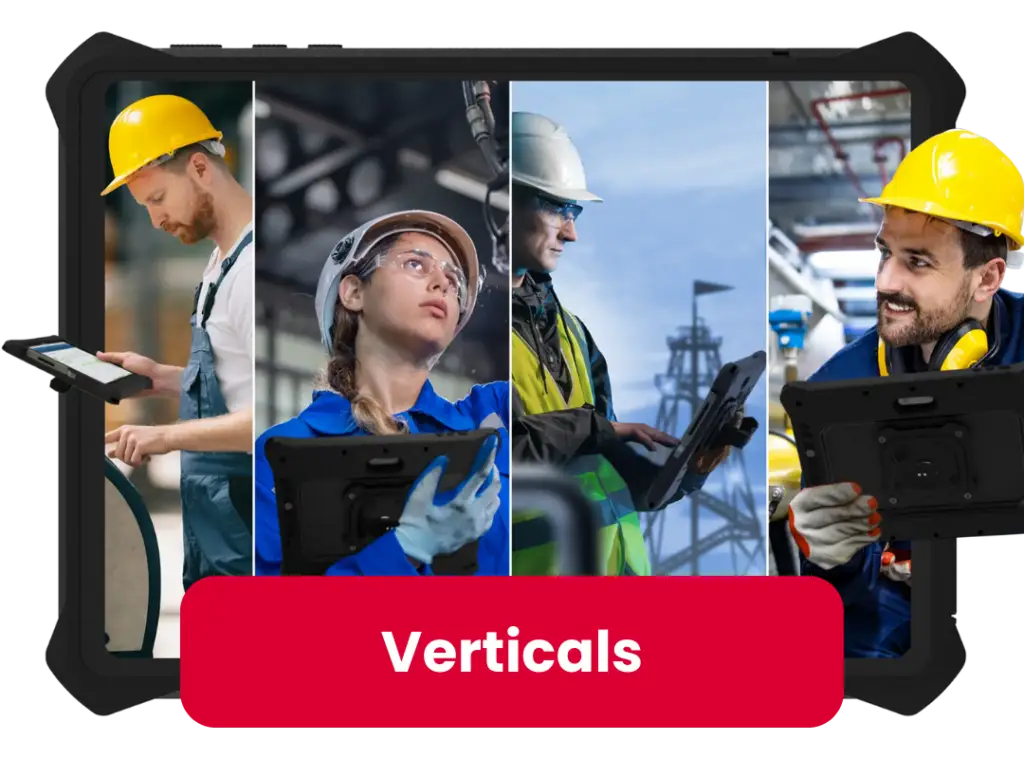
In warehouse and distribution operations, warehouse tablet mounting solutions must securely support devices on forklifts, reach trucks, and automated guided vehicles (AGVs). Equipment operators encounter severe vibration, rapid directional acceleration, and thermal shifts moving between frozen cold storage rooms and ambient loading docks.
Mounting configurations must adhere strictly to OSHA 29 CFR 1910.178 guidelines for powered industrial trucks, ensuring that mounted tablets do not obscure operator visibility or block emergency vehicle controls Standard: OSHA 29 CFR 1910.178.
The Joy Factory’s MagConnect carbon fiber mounting arms deliver an optimal strength-to-weight ratio for vehicle integration. Carbon fiber dampens high-frequency vehicle vibration far more effectively than cast aluminum or plastic brackets, preventing display shake and reducing strain on internal electronics. Magnetic quick-release mechanisms paired with secure mechanical twist locks allow drivers to dock their tablet instantly with one hand when arriving at a loading station, and detach it quickly for mobile inventory audits.
Maintaining Mobile Workforce Connectivity and Touch Screen Precision
An industrial enclosure must preserve key tablet functionality. Heavy screen covers that reduce digitizer responsiveness force operators to strip off their protective work gloves or tap repeatedly to register input, severely lowering operational efficiency.
Purpose-built industrial iPad cases feature glove-calibrated display shields. These heavy-duty polymer screen protectors preserve touch capacitive sensitivity, allowing seamless screen inputs even while operators wear heavy nitrile, neoprene, or cut-resistant work gloves. Integrated camera lenses utilize optical glass covers to guarantee accurate barcode scanning with high-speed 1D/2D scanning engines.
Furthermore, port architecture must support sealed external power pass-throughs, allowing continuous charging on forklift mounting docks without exposing internal pins to corrosive air or moisture.
Frequently Asked Questions
What operational hazards and technical stressors threaten mobile tablets in processing plants?
Mobile devices in manufacturing and warehouse plants face high-pressure washdowns, fine particulate suspension (fine flour, metal dust, sawdust), chemical contact with cleaning agents, mechanical shocks from concrete drops, continuous micro-vibrations on heavy machinery or forklifts, and thermal extremes. In classified chemical zones, atmospheric flammable gases or vapors add the risk of thermal electrical ignition, requiring non-incendive construction.
Why do standard consumer-grade cases and unreinforced brackets fail in frontline deployments?
Consumer-grade cases lack airtight port sealing, chemical resistance against industrial solvents, thermal management, and shock absorption. Unreinforced plastic mounts suffer structural fatigue under standard 5 to 500 Hz plant vibration profiles, causing mount fracture or screen damage. According to empirical studies, deploying unruggedized hardware in industrial environments increases annual failure rates significantly, inflating total cost of ownership by up to 100% per broken unit.
How should plant operations teams evaluate, select, and deploy purpose-built hardware?
Operations teams must follow a three-tier technical evaluation process: 1) Match the physical environment with certified protection levels such as IEC IP65/IP68 and MIL-STD-810H transit drop ratings. 2) Assess safety compliance by verifying Class I, Division 2 certification for hazardous areas containing flammable vapors. 3) Select vibration-damped carbon fiber mounting arms and quick-release mechanisms that ensure OSHA compliance, operator visibility, and seamless shift transitions.
What are the key operational takeaways and ROI benchmarks for this deployment?
Deploying purpose-built rugged tablet enclosures yields four major ROI benchmarks:
- Failure Rate Reduction: Drops mobile device deployment failure rates by up to 62% Source: VDC Research.
- Compliance Safety: Meets OSHA 29 CFR 1910.178 cabin safety rules and NFPA 70 Class I, Div 2 standards.
- Workforce Productivity: Eliminates manual paper logging and ensures continuous mobile workforce connectivity across floor operations.
- Device Longevity: Extends total hardware lifecycles from 12 months (consumer gear) to 36-60 months.
Cited Standards & Industry Sources
- VDC Research (Strategic Insights Enterprise Mobility and AutoID): Mobile device failures in enterprise plant environments increase total cost of ownership by up to 100% per failed device, and purpose-built rugged hardware reduces deployment failure rates by up to 62%. | Official Reference
- U.S. Department of Defense (MIL-STD-810H Environmental Engineering Considerations): MIL-STD-810H Method 516.8 Transit Drop requires 26 drop impacts from 4 feet onto concrete covered by plywood, and Method 514.8 certifies resistance to 5 to 500 Hz industrial vibration profiles. | Official Reference
- International Electrotechnical Commission (IEC 60529 Ingress Protection Standard): IEC 60529 IP65 rating guarantees complete protection against dust ingress and protection against water jets from 6.3 mm nozzles at 12.5 liters/min, while IP68 certifies continuous submersion under pressure. | Official Reference
- National Fire Protection Association (NFPA 70 National Electrical Code (NEC) Article 500): Class I, Division 2 environments contain flammable gases, vapors, or liquids that are not normally present in explosive concentrations but may accumulate under abnormal operating conditions. | Official Reference
- Occupational Safety and Health Administration (OSHA 29 CFR 1910.178 Powered Industrial Trucks): Powered industrial truck operator visibility guidelines mandate clear line of sight and secure hardware mounting that prevents operator distraction and cabin hazards. | Official Reference
Conclusion
Standard commercial tablets lack the mechanical resilience, chemical stability, and explosive safety ratings needed for aggressive manufacturing and warehousing environments. Equipping your mobile workforce with uncertified accessories risks continuous equipment downtime, high replacement costs, and safety non-compliance.
The Joy Factory engineers certified rugged iPad cases, Class I, Division 2 hazardous-location enclosures, and MagConnect carbon fiber mounting solutions engineered specifically for industrial plant workflows. Protect your mobility investment, ensure workforce productivity, and achieve long-term ROI across every shift.
Explore The Joy Factory enterprise solutions or contact our industrial sales team today to request a hardware evaluation kit tailored to your plant environment.