You’ve done the right thing and equipped your mobile workforce with rugged cases. Your iPhone 17 fleet is now shockproof, MagSafe compatible, and ready for the field. But what about the part of the device your team touches, swipes, and relies on every single second of the day?
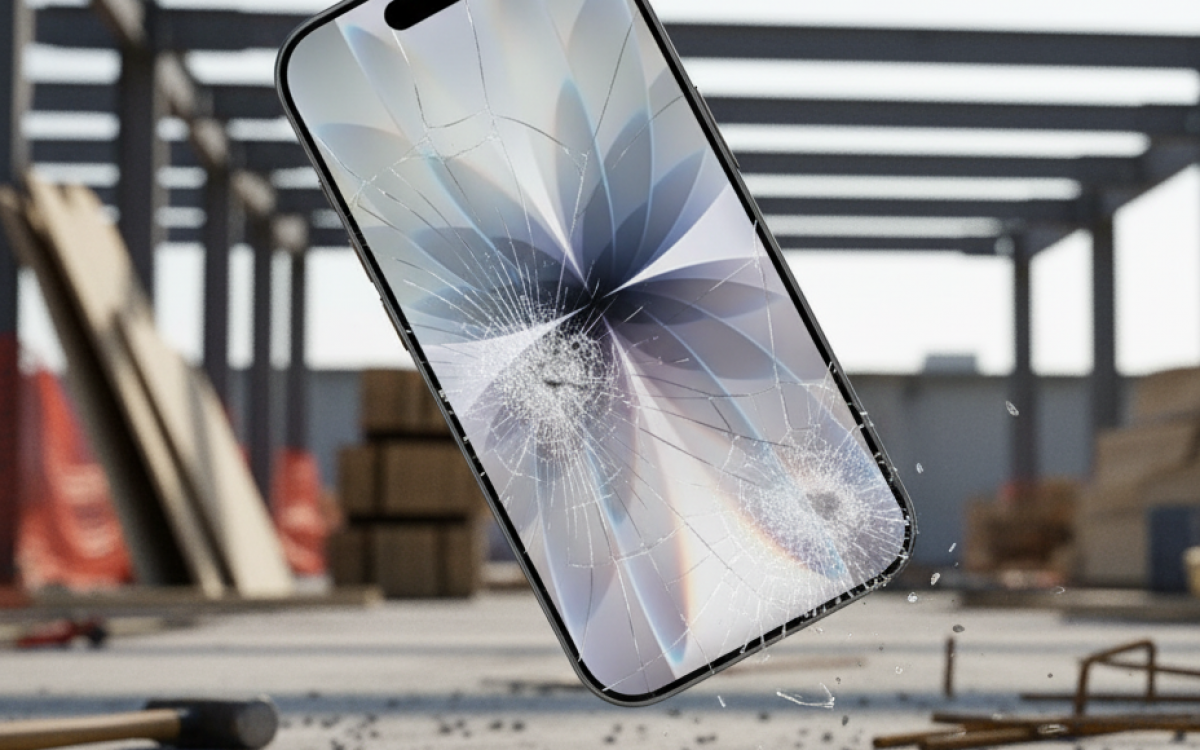
In any industrial or logistics setting, the screen is the most exposed point of failure. A single deep scratch, a web of cracks from a tool drop, or a layer of oily grime can bring a workflow to a screeching halt. A standard case might protect the corners, but leaving the glass exposed creates a glaring weak link in your otherwise rugged setup. This guide explains why sealing that vulnerability is non-negotiable.
1. The True Cost of Micro-Scratches
Your team can’t afford downtime, and in modern industry, “downtime” often starts with a scratch. Industry experts know that as screens accumulate micro-abrasions from grit, keys, and concrete dust, the clarity of the display degrades.
This isn’t just an aesthetic issue; it’s a productivity killer. It means:
- Warehouse Pickers face “No Read” errors when barcode scanners can’t focus through scratched glass, forcing time-consuming manual entry.
- Field Technicians struggle to read detailed schematics or maps in bright sunlight due to the “haze” of a damaged screen.
- Safety Inspectors risk missing critical details in photos or compliance checklists.
Protecting the body of the phone is only half the battle. To ensure true operational efficiency, you have to preserve the optical clarity of the interface.
2. Who Is Most at Risk?
Standard “stick-on” screen protectors often peel, bubble, or degrade quickly in harsh environments. This is especially risky if you work on the front lines where abrasive materials are part of the daily routine. You are particularly vulnerable if you are a:
- Logistics Manager: Moving devices rapidly between docks, forklifts, and pockets filled with keys or box cutters.
- Construction Supervisor: Reviewing plans on site where concrete dust and sand act as sandpaper on native glass.
- Manufacturing Associate: Working with gloved hands that may transfer grease, oil, or metal shavings onto the display.
For all rugged mobile workers, an unprotected screen is an inefficiency waiting to happen.
3. The Ultimate Solution: Integrated 9H Tempered Glass
A professional-grade screen protector isn’t a luxury; it’s an essential piece of equipment for preserving your hardware investment.
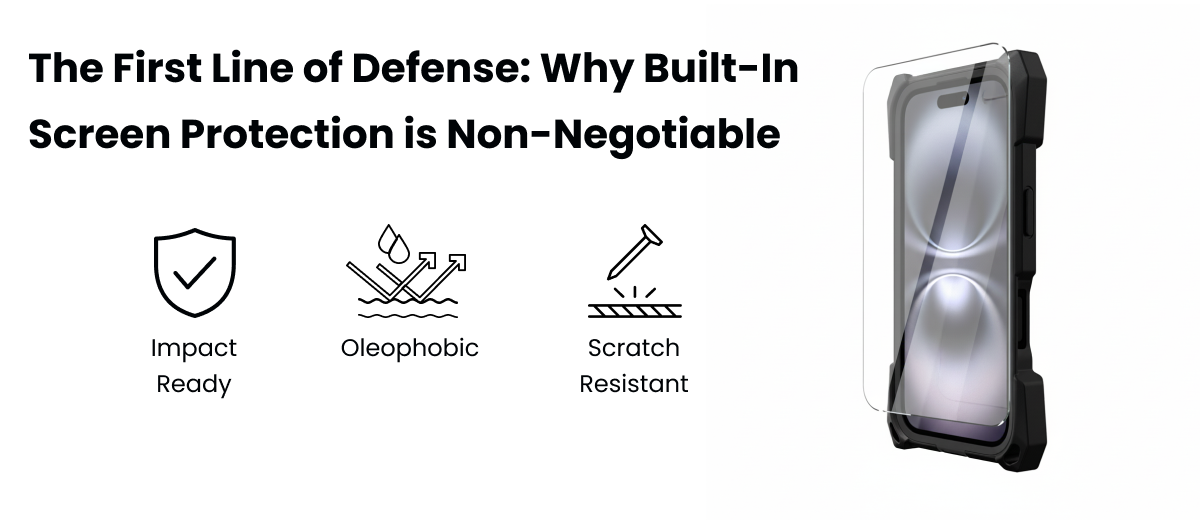
The aXtion Edge for iPhone 17 is specifically engineered to solve this vulnerability. Unlike aftermarket films, our case features a built-in 9H Tempered Glass Screen Protector. It is designed to be:
- Impact Ready: Acting as a sacrificial layer that absorbs shock to save your actual screen from shattering.
- Scratch Resistant: With a 9H hardness rating that resists steel blades and abrasive grit.
- Oleophobic: Featuring an oil-repellent coating that prevents fingerprints from blurring your data.
It’s the final piece of the puzzle for a truly field-ready, maintenance-free mobile workstation.
Conclusion
A truly rugged setup should have no weak points. While your case protects the internal hardware, the screen remains your primary tool for communication and data capture. By securing it with integrated, military-grade glass, you create a fully protected ecosystem that eliminates frustration and keeps your team productive, no matter the conditions.
Is your screen the last unprotected link in your workflow?
Explore the aXtion Edge for iPhone
Explore Rugged Protection for Surface & Apple Devices
- Browse Our aXtion Rugged Cases – Explore our full lineup of rugged cases and mounts.
- Request a Demo – See how our solutions perform in your environment.