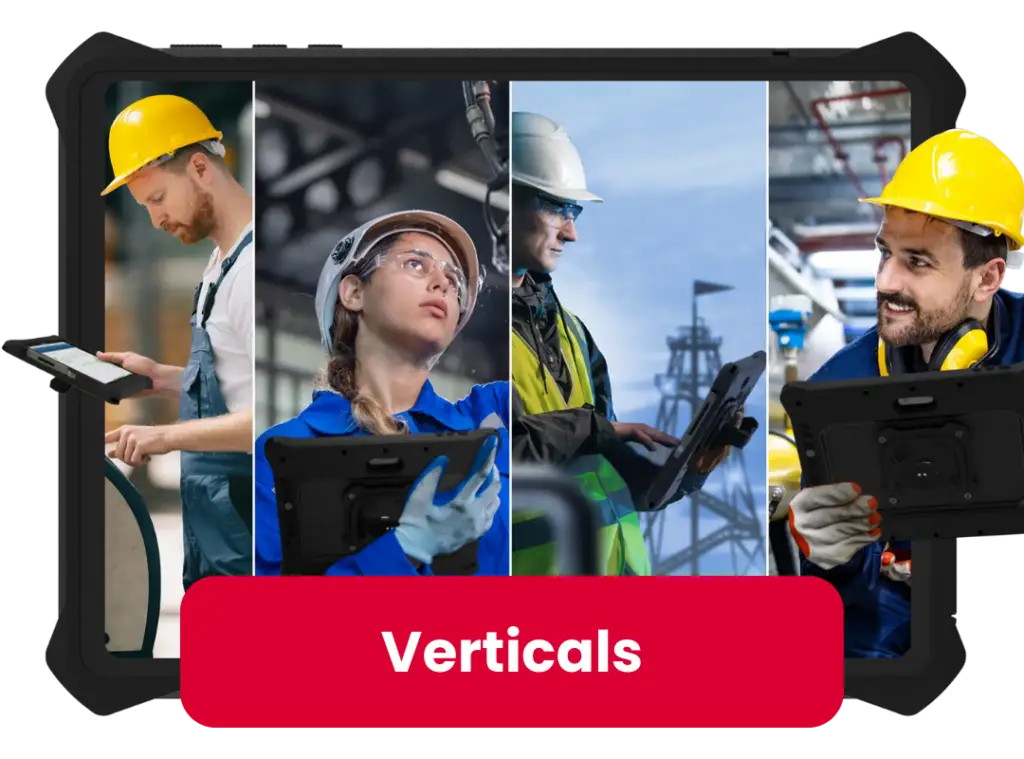

Historically, using consumer mobile devices in hazardous industrial areas was restricted due to unknown ignition risks. However, the development of certified hazardous location (HazLoc) enclosures now allows organizations to standardize and deploy mobility hardware with confidence that safety requirements are met or exceeded.
Deploying mobile technology within hazardous environments is a sophisticated operational undertaking. Success demands a comprehensive strategy that encompasses certified solutions with procedural discipline. Whether you are operating in oil and gas, chemical processing, or manufacturing, here is your guide to navigating device certification and managing the enterprise ownership lifecycle.
The Essential Requirements for Certified Enclosures
A key evolution in this industry is understanding that certified equipment effectively builds upon the foundation of a ruggedized product, adding a specialized layer of assessment and protection to ensure the device never becomes an ignition source. While rugged devices survive harsh handling, their internal circuitry can still act as an ignition source. Rather than simply aiming for atmospheric compatibility, HazLoc-certified solutions are defined by their ignition-proof integrity.
When evaluating mobile hardware for Class I, Division 2 or Zone 2 areas, the equipment must meet several strict engineering criteria:
- The Assembly Principle: It is important to note that a protective case alone cannot be “certified” for use in hazardous areas. The specific Smartphone model combined with a specific protective housing must be tested and certified as a single system by a Nationally Recognized Testing Laboratory (NRTL), such as UL, CSA, or Intertek.
- Non-Incendive Circuitry: The system must be evaluated so that no spark or thermal effect produced under normal operating conditions is capable of igniting the specified hazardous atmosphere.
- Environmental Sealing: The assembly must provide a robust physical barrier against the environment, to protect against moisture and particulate matter.
- Strict Charging Boundaries: Charging the device or interfacing with wired accessories is strictly prohibited within classified areas. The certification relies on the electrical and mechanical integrity of the sealed assembly; therefore, connecting or disconnecting the device can generate an incendive spark, creating an immediate ignition risk. To maintain the safety rating, the device must remain fully seated within its enclosure, and all charging or data transfer must occur exclusively in non-hazardous locations.
Managing the Enterprise Device Ownership Lifecycle
Procuring the right hardware is only the first step. To maintain a compliant and safe mobile deployment, organizations must implement a lifecycle framework.
Phase 1: Environmental Assessment
Before selecting hardware, an organization must define the regulatory parameters of the operating environment.
- These requirements vary by region and industry; for example, facilities may operate under the NEC/CEC (North America), ATEX (Europe), or IECEx (International) frameworks, among others
- Consult with HSE to determine area classification in intended deployment areas:
- The Material Profile: Whether the environment contains flammable gases (Class I), combustible dusts (Class II), or ignitable fibers/flyings (Class III).
- The Likelihood of Risk: Whether the hazard is present under normal operating conditions (Division 1 / Zone 0 or 1) or only during abnormal/fault conditions (Division 2 / Zone 2).
Phase 2: Procurement
Standard consumer-grade devices do not possess the non-incendive properties required for volatile areas.
- Only utilize solutions where the specific device and enclosure have been tested together as a single, integrated system by a Nationally Recognized Testing Laboratory (NRTL), and where that NRTL has issued a formal Certificate of Conformity.
- Before deployment, ensure that the area classification listed on the solution’s certification label is suitable for the specific area classification determined during the initial assessment phase. It is not enough for a device to be “certified”; its specific rating (e.g., Class, Division/Zone, and Temperature Class) must meet or exceed the requirements of the environment where it will be used.
Phase 3: Digital Configuration & Fleet Management
A secure physical device must be matched with a secure and controlled software environment.
- Utilize Mobile Device Management (MDM) software to enforce security policies, manage OS updates, and maintain a standardized app catalog.
- Restrict access to non-essential applications to ensure the device remains a dedicated professional tool.
- Use location-based services to automatically disable certain device functions if users transition into more restricted areas.
Phase 4: Safety Protocols & Training
Hardware certification is only effective when supported by strict user protocols.
- For detailed operational parameters and safety constraints, consult the specific User Guide provided for this solution. All users must strictly adhere to the instructions and maintenance protocols included with the equipment to ensure the continued integrity of the hazardous location protection.
- Educate personnel on Temperature Codes (T-codes) and the specific Area Classifications designated for the solution. Training should emphasize that while standard radios offer broad mobility, specialized mobile solutions are engineered for specific hazardous zones to ensure maximum data capability without compromising site safety.
Phase 5: Maintenance and Continuous Audit
HazLoc certification remains valid only as long as the device remains in its original, tested condition.
- Establish routine physical inspections based on site requirements, supplemented by daily user checks to identify structural stress and verify seal integrity according to the specific maintenance procedures in the technical manual.
- Record the service history, inspection results, and battery health for every device in the fleet to ensure an audit-ready trail.
- Deploy QR or RFID tags on the exterior of the assembly to link the physical hardware directly to its digital maintenance record.
By prioritizing third-party, NRTL-certified assemblies and robust management protocols, organizations can improve connectivity and productivity on common operating platforms while maintaining the uncompromising safety and security of their personnel.
Are there specific environmental classes or hazard zones at your facility that you need to prioritize for your upcoming device deployment?
Explore Certified HAZLOC Solutions
Explore Rugged Protection for Surface & Apple Devices
- Browse Our aXtion Rugged Cases – Explore our full lineup of rugged cases and mounts.
- Request a Demo – See how our solutions perform in your environment.